


Author's Bibliography
Dr. Jiajia Pan pursued his undergraduate studies at Université Blaise Pascal (Clermont-Ferrand II) in France and Copenhagen Business School, obtained his Master's degrees from Université Jean Moulin Lyon 3 in France and Lingnan College of Sun Yat-Sen University, and earned his doctoral degree from The Education University of Hong Kong.
He holds qualifications as a National Senior Oenologist of China, and serves as both a winery investor and a publisher. Additionally, he holds positions as an external supervisor for master's programs at the School of Tourism Management, Sun Yat-Sen University; the School of Tourism, Xinjiang University; the School of Tourism Management, South China Normal University; the School of Wine and Horticulture, Ningxia University; and Burgundy School of Business.
With 20 years of experience in the wine industry, Dr. Pan's business scope encompasses international trade, brand marketing, sales and marketing, winery investment, cultural dissemination, and professional training and education.
In terms of academic achievements, he is the co-editor-in-chief of the “Report on the Integrated Development of China's
Wine Industry” (the Blue Book of China's Wine Industry). He has also edited and published several wine-related textbooks,
including “Wine Service and Management”. He initiated the China Wine Academy project, aiming to advance the global outreach of Chinese wine brands and culture by establishing an international education system for Chinese wines.
His research interests lie in wine marketing, wine tourism, wine sensory evaluation, supply chain management in the wine
industry, and vocational education. He also serves as the editor-in-chief of the journals “Global Cases and Practices of Vocational Education” and “Food and Beverage Studies”.
潘家佳博士本科就读于法国克莱蒙费朗第二大学、丹麦哥本哈根商学院,硕士毕业于法国里昂第三大学和中山大学岭南学院,博士毕业于香港教育大学。
他持有中国国家一级品酒师、国家一级酿酒师资质,兼具酒庄投资人与出版人身份。他同时还担任中山大学旅游学院、新疆大学旅游学院、华南师范大学旅游管理学院、宁夏大学葡萄酒与园艺学院和勃艮第商学院硕士项目校外导师。
潘家佳博士有20 年葡萄酒行业经验,业务涵盖国际贸易、品牌营销、市场销售、酒庄投资、文化传播及专业人员培训教育。
学术成果上,他是《中国葡萄酒产业融合发展报告》(中国葡萄酒产业蓝皮书)的联合主编,主编出版包括《侍酒服务与管理》在内的多本葡萄酒相关教材。发起China Wine Academy ( 探酒中国) 计划,通过构建中国葡萄酒的国际化教育体系,推进中国葡萄酒品牌与文化的出海。
他的研究方向为葡萄酒市场营销、葡萄酒旅游、葡萄酒感官品鉴、葡萄酒供应链管理及职业教育。同时担任《全球职业教育案例与实践》和《食品与饮品研究》中英文期刊主编。
About the Book
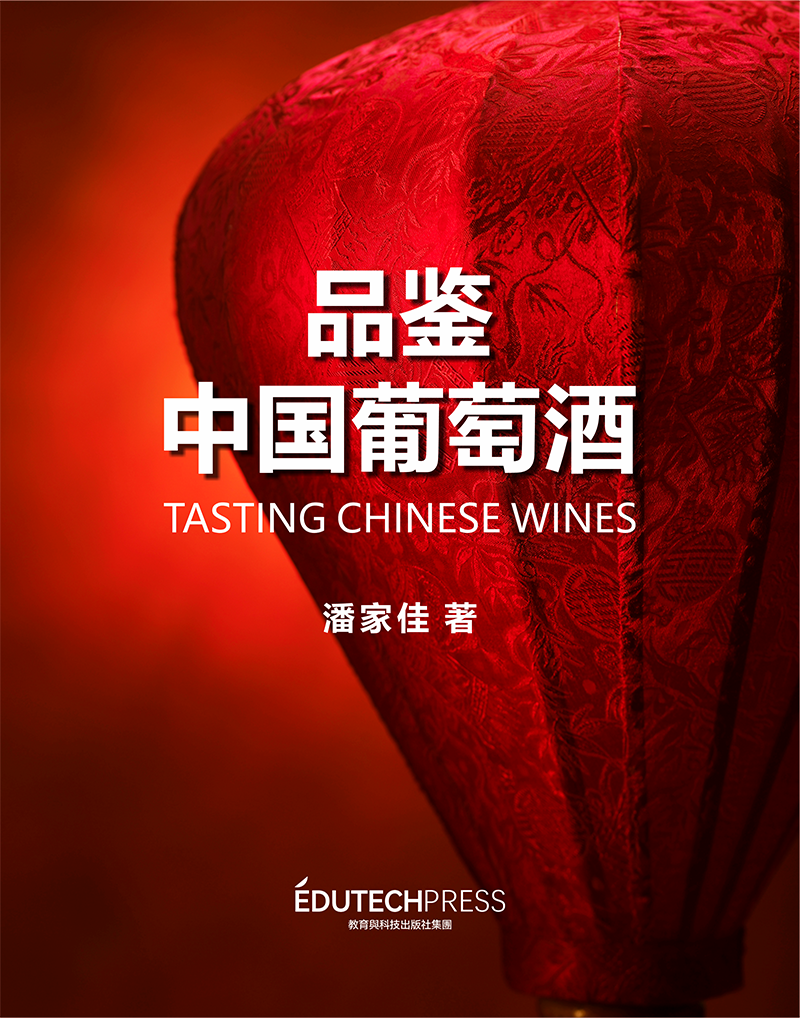
Tasting Chinese Wines (Simplified Chinese Version) is the world's first practical textbook on wine appreciation crafted from the perspective of Chinese culture. It pioneers the establishment of a localized wine appreciation system tailored to Chinese taste buds and cultural cognition, filling the void in the native discourse system dominated by Western appreciation standards. The book combines professional guidance, cultural subjectivity, and practical applicability, serving as an excellent learning tool for wine professionals, enthusiasts, catering industry practitioners, as well as faculty and students in academic institutions. It also stands as a vital vehicle for promoting the dissemination of Chinese wine culture and the development of the industry.
The book begins by systematically outlining the core wine-producing regions in China, ranging from the Gobi Desert terroir in the eastern foothills of the Helan Mountains in Ningxia to the maritime climate in Yantai, Shandong; from the remaining ranges of the Yanshan Mountains in Huailai, Hebei, to the sunlight advantages in the northern foothills of the Tianshan Mountains in Xinjiang; and further to the plateau characteristics of Diqing, Yunnan. It provides a detailed analysis of the terroir features, representative wineries, and typical wine styles of each region. Simultaneously, it focuses on native core grape varieties such as Cabernet Sauvignon, Cabernet Gernischt, Marselan, Longyan, and Italian Riesling, presenting in-depth their localized flavor expressions in different regions and constructing a foundational cognitive framework for readers on Chinese wines.
As a core highlight of the book, it creates an exclusive Chinese wine appreciation language system centered around the three major appreciation steps: "look, smell, and taste." In the color observation step, it innovatively introduces a wine color chart based on traditional Chinese colors, replacing obscure Western terminology to make color descriptions more aligned with the aesthetic and cognitive habits of the Chinese people. In the aroma identification step, it breaks through tradition by using commonly found Chinese spices, sauces, and floral and fruity scents such as Sichuan pepper, star anise, fermented broad bean paste, dried tangerine peel, and osmanthus to interpret wine aromas, awakening the unique olfactory memories of the Chinese and lowering the barriers to wine appreciation.
Building upon this foundation, the book further delves into professional dimensions of wine such as complexity, balance, tannin texture, and finish length, providing an advanced breakdown of appreciation techniques. It elaborates on key points such as flavor layers and aging potential, accompanied by practical training methods, to guide readers from novice to professional levels, enhancing their judgment and appreciation of wines.
Notably, the book bridges the gap between wine and Chinese culinary culture by systematically introducing the pairing logic between major Chinese cuisines, including Sichuan, Cantonese, Shandong, and Huaiyang, and local wines. It lists classic dishes from each cuisine, accurately matching them with wines from corresponding regions based on ingredient characteristics and flavor profiles, offering directly implementable pairing solutions. This transforms the concept of "pairing Chinese wines with Chinese dishes" from a mere notion into a practical culinary aesthetic.
This book is not merely a professional appreciation textbook; it embodies cultural confidence as its core philosophy, deeply integrating local terroir, traditional elements, and professional appreciation. It provides a localized professional methodology for wine appreciation, offers practical references for winery selection, restaurant wine list design, and sommelier services, and serves as a significant carrier for conveying the terroir charm and cultural connotations of Chinese wines to the world, facilitating the establishment and international dissemination of Chinese wine appreciation standards.
《品鉴中国葡萄酒》(简体中文版)是全球首部以中国文化视角打造的葡萄酒品鉴实用教材,开创性地建立起适配中国味觉与文化认知的本土化葡萄酒品鉴体系,填补了西方品鉴标准主导下本土话语体系的空白。全书兼具专业指导性、文化主体性与实践落地性,既是葡萄酒从业者、爱好者、餐饮从业者及院校师生的优质学习工具,也是推动中国葡萄酒文化传播与产业发展的重要载体。
书中首先系统梳理了中国葡萄酒的核心产区版图,从宁夏贺兰山东麓的戈壁风土到山东烟台的海洋气候,从河北怀来的燕山余脉到新疆天山北麓的光照优势,再到云南迪庆的高原特色,详细解析了各产区的风土特征、代表酒庄与典型酒款风格;同时聚焦赤霞珠、蛇龙珠、马瑟兰、龙眼、贵人香等本土核心葡萄品种,深入呈现其在不同产区的本土化风味表现,为读者构建起对中国葡萄酒的基础认知框架。
作为全书的核心亮点,本书围绕“看、闻、品”三大品鉴步骤,打造了专属中国的品鉴语言体系。看色环节独创以中国传统色彩为核心的葡萄酒颜色图谱,替代晦涩的西方术语,让色彩描述更贴合国人的审美与认知习惯;闻香环节则突破传统,选用花椒、八角、豆瓣酱、陈皮、桂花等中国本土常见的香料、酱料与花果气息来诠释葡萄酒香气,唤醒国人专属的嗅觉记忆,降低品鉴门槛。
在此基础上,本书进一步深入探讨了葡萄酒的复杂度、平衡感、单宁质感、余味长度等专业维度,对品鉴技巧进行进阶拆解,详解风味层次、陈年潜力等关键要点,并附上实操训练方法,帮助读者从入门走向专业,提升对葡萄酒的判断力与鉴赏力。
尤为值得关注的是,本书打通了葡萄酒与中国饮食文化的融合链路,系统介绍了川、粤、鲁、淮扬等中国各大菜系与本土葡萄酒的搭配逻辑。书中罗列了各菜系的经典名菜,结合食材特性与风味特点,精准匹配对应产区的葡萄酒款,给出可直接落地的搭配方案,让“中国酒配中国菜”的理念不再停留于概念,而是成为可实践的饮食美学。
这本书不仅是一本专业的品鉴教材,更以文化自信为核心理念,将本土风土、传统元素与专业品鉴深度结合。它既为葡萄酒品鉴提供了本土化的专业方法论,也为酒庄选品、餐厅酒单设计、侍酒服务提供了实用参考,更成为向世界传递中国葡萄酒风土魅力与文化内涵的重要载体,助力中国葡萄酒品鉴标准的建立与国际化传播。
